The Hormone Rollercoaster: Your Guide to Understanding the Menopause Transition
Ever wondered why perimenopause can feel like your body has completely lost the plot? Let's take a visual journey through the different phases of our reproductive life and see exactly what's happening with our hormones. Trust me, once you see these graphs, so much will suddenly make sense!
The Glory Days: Your 20s and Early 30s
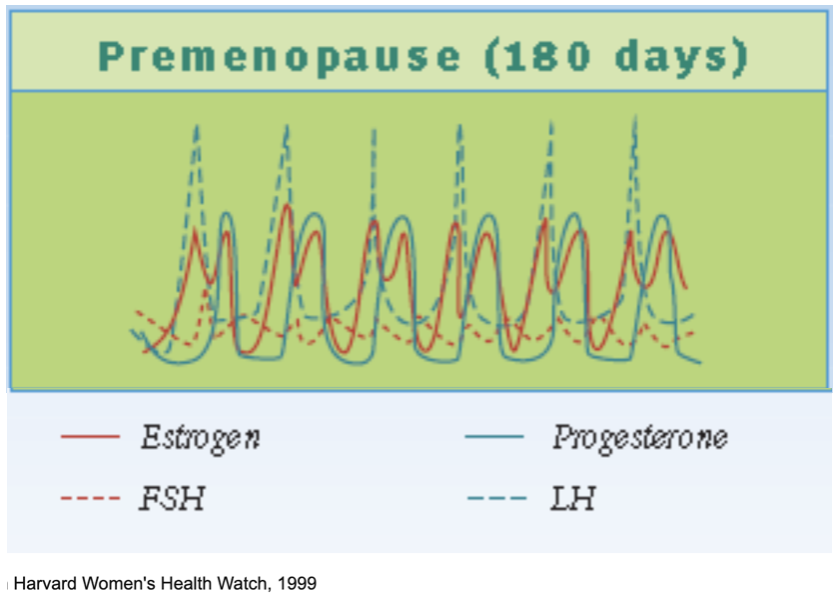
Remember when your cycle was predictable? (Or at least, more predictable?) During premenopause—that's the time even before perimenopause begins—our hormones follow a beautifully orchestrated dance. Thanks to research from Harvard Women's Health Watch, we can see exactly what this looks like.
Meet Your Four Main Hormones
Think of these as the key players in your monthly cycle:
Estrogen (the red solid line) comes from all those eggs in your ovaries, playing a starring role throughout your cycle.
Progesterone (the blue solid line) is produced in the ovaries to help stabilize your uterine lining. Think of it as estrogen's balancing partner, keeping everything in harmony.
Follicle-Stimulating Hormone or FSH (the red dotted line) comes from your pituitary gland in the brain. It's like a messenger that tells your ovaries, "Hey, wake up those eggs!"
Luteinizing Hormone or LH (the blue dotted line) then releases an egg for ovulation and helps everything reset if no fertilization happens.
Now, this is definitely a simplified view of these complex molecules, but it helps us understand what changes during the menopause transition. During this phase, everything is stable and predictable. While that doesn't guarantee easy menstrual cycles (we all know that's not always the case!), from a hormonal perspective, it's following a nice, orderly pattern.
Enter Perimenopause: When Chaos Reigns
Now, let's compare that neat, predictable graph with what starts happening during perimenopause.
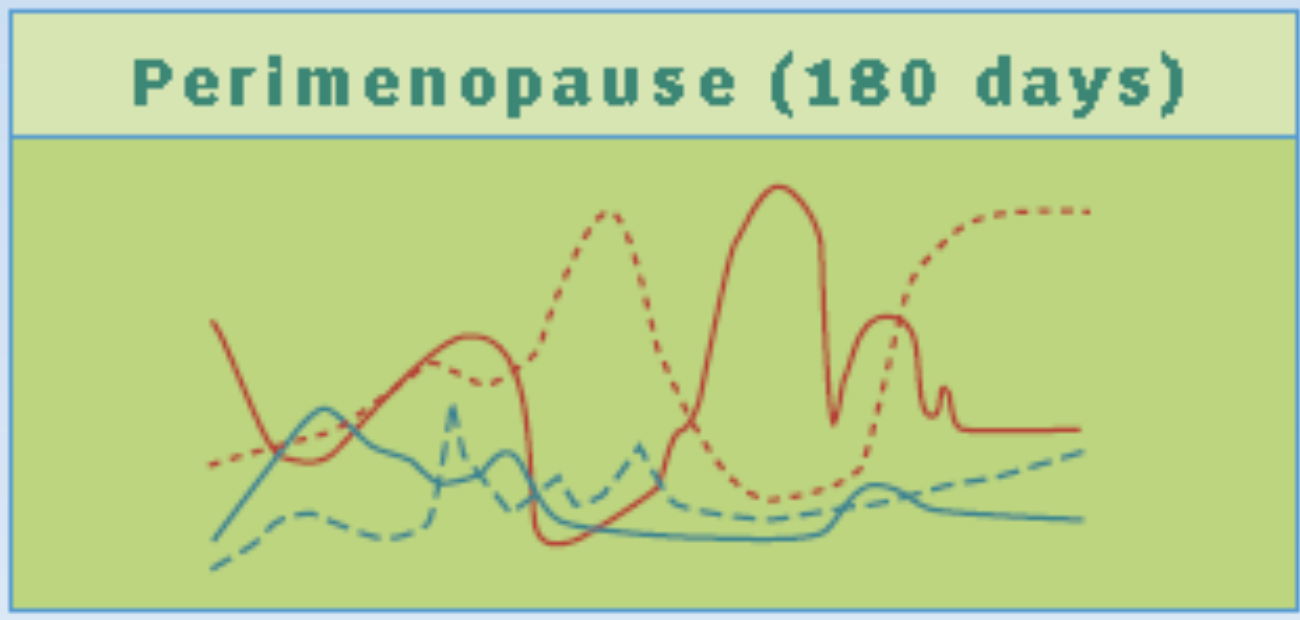

Woah—what happened to those nice, orderly cycles? See how the lines look like they're fluctuating almost randomly? This visual perfectly captures why we often feel so chaotic during this time in our lives. Your hormones aren't broken—they're just having a bit of a identity crisis!
Why Your Doctor Won't Check Your Hormone Levels
Looking at this hormonal chaos helps explain why doctors correctly choose not to check your hormone levels during perimenopause. I often tell my patients that during this phase, the gas and the brakes are no longer working together.
Here's what's happening: Your ovaries are no longer responding predictably to your pituitary gland's signals. Some months, your ovaries release no eggs at all. Other months, they might release more than one egg at completely random times. That's all because FSH and LH are out of sync—adding even more chaos to an already turbulent time.
The key thing to understand? Although everything feels chaotic, the overall trend is for estrogen levels to continually decline. That's because your ovarian egg reserve is dwindling—it's the natural progression of things.
The Calm After the Storm: Postmenopause
Here's the good news: about one to two years after your final menstrual period, the chaos tends to settle down and things start to level off. The final graph shows this beautifully.
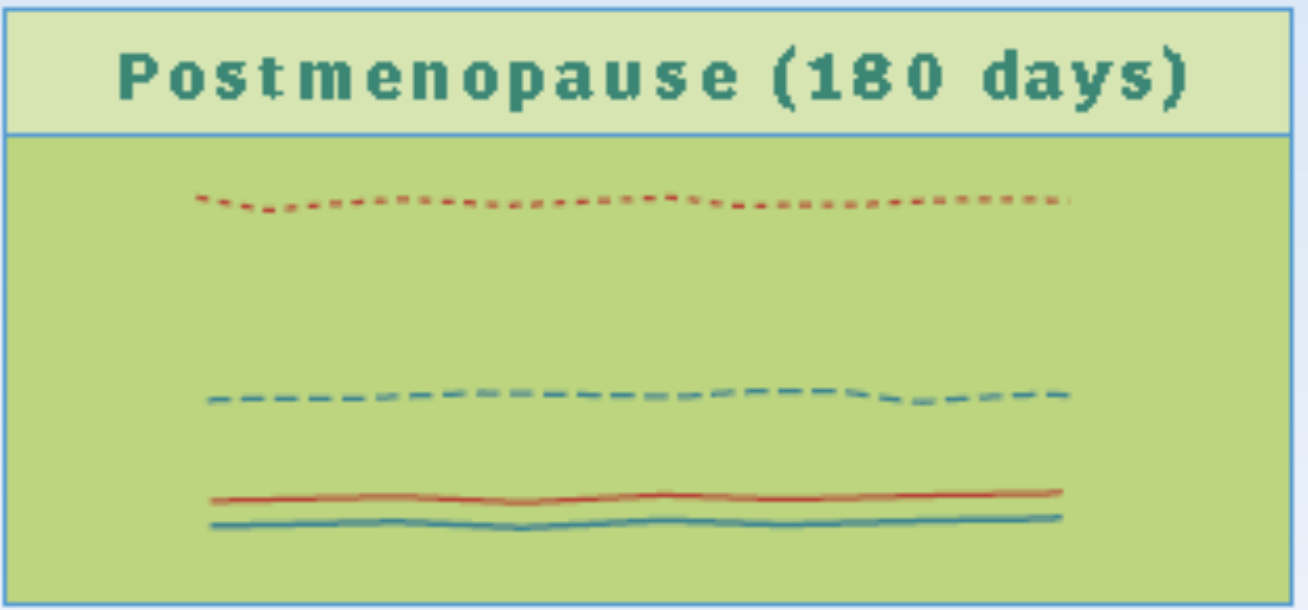

What a difference a couple of years makes, right?
For many women, symptoms settle down at this point. If you've been a long-time migraine or PMS sufferer, you may finally wave goodbye to those monthly visitors. Pregnancy is no longer possible in this phase, and that brain fog that's been plaguing you? It tends to improve over time.
The Bottom Line
Understanding what's happening with your hormones during these different life phases can be incredibly empowering. When you know that the chaos of perimenopause is normal—that those wild fluctuations are just your body transitioning—it can make the journey a little less frightening.
And remember: this too shall pass. The calm waters of postmenopause are waiting on the other side.
Have questions about your own menopause transition? Talk to your healthcare provider about what symptoms are normal and which ones might benefit from treatment.